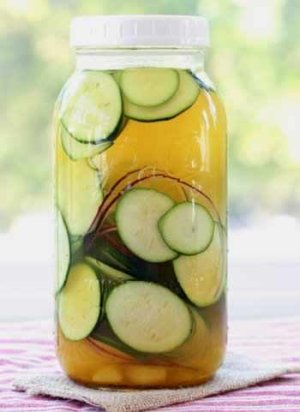
 Lacto-Fermenation is one of the oldest food preservation methods still regularly used. It is not Witchcraft or Sorcery and it's effective tasty and pretty much bullet proof. If it tastes good, then it's good. Plus the resultant pickles have the benefit of home made probiotics. Lacto-Fermentation has nothing to do with dairy products, the lacto refers to lactic acid. All fruits and vegetables have beneficial bacteria such as Lactobacillus on the surface. In an anaerobic (oxygen-free) environment, these bacteria convert sugars into lactic acid, which inhibits harmful bacteria and acts as a preservative. It's also what gives fermented foods their characteristic sour flavour. The earliest record of fermentation dates back as far as 6000 B.C. in the Fertile Crescent -and nearly every civilization since has included at least one fermented food in its culinary heritage. From Korean kimchi and Indian chutneys to the ubiquitous sauerkraut.

When there’s 500g of Chicken Livers with a 33p discount sticker on it, you have to be inventive…..
So an 80p box of Chinese Stir-Fry bits, some Rice Noodles and a few bits and bobs from the cupboards and 20 minutes later we had this…
Ingredients:-
Chicken Livers
Milk
Breadcrumbs (Gluten free in our case)
Flour (Gluten free in our case)
Garlic Salt
Onion Salt
Mustard Powder
Black Pepper
Mixed Herbs
Chilli flakes
Rice Noodles
Stir-Fry Pack
Oil
Method:-
(1) Add Garlic Salt, Onion Salt, Mustard Powder, Black Pepper, Mixed Herbs and Chilli flakes to Milk and soak the Chicken livers.
(2) Add Garlic Salt, Onion Salt, Mustard Powder, Black Pepper, Mixed Herbs and Chilli flakes, Bread Crumbs to the Flour and mix well.
(3) Give the Livers a good hour in the Milk mixture.
(4) Dredge the Livers in the Flour coating and set aside.
(5) In a large frying pan or Wok fry the Stir-Fry ingredients.
(6) Boil a kettle full of water.
(7) Heat the deep fat Fryer.
(8) Heat a large pan of salted water.
(9) In a separate frying pan fry the livers in a little Oil, turning occasionally.
(10) Drop ½ of the Noodles in the boiling water for a minute or so. Then drain and set aside.
(11) Pop the remaining Noodles in the fryer for a few seconds so that they puff up. Set aside to drain on kitchen paper.
(12) Run the Noodles through with boiling water so that they separate.
(13) Plate with the Noodles at the bottom, the Stir-Fry veg over the top, the crispy Chicken Livers and then dress with the crispy Noodles.
All in all for a cost of less than £3 for us and Tigger the Cat this was an outstanding meal!


