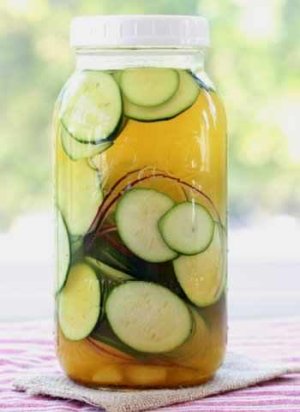
 Lacto-Fermenation is one of the oldest food preservation methods still regularly used. It is not Witchcraft or Sorcery and it's effective tasty and pretty much bullet proof. If it tastes good, then it's good. Plus the resultant pickles have the benefit of home made probiotics. Lacto-Fermentation has nothing to do with dairy products, the lacto refers to lactic acid. All fruits and vegetables have beneficial bacteria such as Lactobacillus on the surface. In an anaerobic (oxygen-free) environment, these bacteria convert sugars into lactic acid, which inhibits harmful bacteria and acts as a preservative. It's also what gives fermented foods their characteristic sour flavour. The earliest record of fermentation dates back as far as 6000 B.C. in the Fertile Crescent -and nearly every civilization since has included at least one fermented food in its culinary heritage. From Korean kimchi and Indian chutneys to the ubiquitous sauerkraut.

We thought we’d continue with the Swedish theme. Clearly we can’t get Wapiti (Elk) Meat locally, so we just went with boneless belly Pork and winged it…
Ingredients:-
500g of Belly Pork, cubed with the rind removed
1 Onion, chopped
2 Carrots, chopped
1 Leek, chopped
1 Parsnip, chopped
1 Bay Leaf
1 Sprig of Thyme
10 Peppercorns
Salt to season
Dill Reduction Ingredients:-
50g of Fresh Dill
120ml of Water
3 Tbsp of White Wine Vinegar
3 Peppercorns
40g of Sugar
120ml of Milk (Lactose free for us)
2 Tbsp of Ground Cashew Nuts
2 Tbsp of Cornflour mixed with a little water
Method:-
(1) Put the Pork in a pan and cover with cold water.
(2) Bring to the boil covered for a couple of minutes.
(3) Drain and rinse the Pork and clean out the pan.
(4) Return the Pork with the Onions, Carrot, Leek, Bay Leaf, Thyme, Peppercorn and season with Salt.
(5) Add enough water to cover everything and bring to the boil.
(6) Reduce the heat and simmer for about an hour.
(7) For the Dill reduction remove the fronds from the stems and set aside.
(8) Put the stems, Water,Peppercorns, Sugar and Vinegar in a pan and boil for 5 minutes.
(9) Set aside to cool.
(10) When the meat is cooked strain and reserve about 450ml of the stock.
(11) Return the Meat and Vegetables to the pan with the 450ml of stock.
(12) Whisk the Milk and Cashew Nuts together and add to the pan over a low heat.
(13) Add the Dill reduction and season to taste.
(14) Thicken with Cornflour and Water mixture stirring regularly.
(15) Serve garnished with the Dill fronds.
Although we loved the Dill flavours we found the sauce to be a bit too sweet for us. It was probably because we are , having to use Cashew Nuts + Lactose free Milk to replace Cream in sauces. So the sweetness of the Cashew Nuts, plus the Sugar and the sweetness of the root vegetables probably all combined.


